ClearSKY Usability Score
A calibrated per-pixel probability of whether satellite imagery is usable for downstream analysis - giving customers a flexible quality signal instead of fixed cloud/no-cloud classes.
- Continuous per-pixel usability probability
- Thresholdable by workflow, region and application
- Built for filtering, weighting, mosaicking and automation
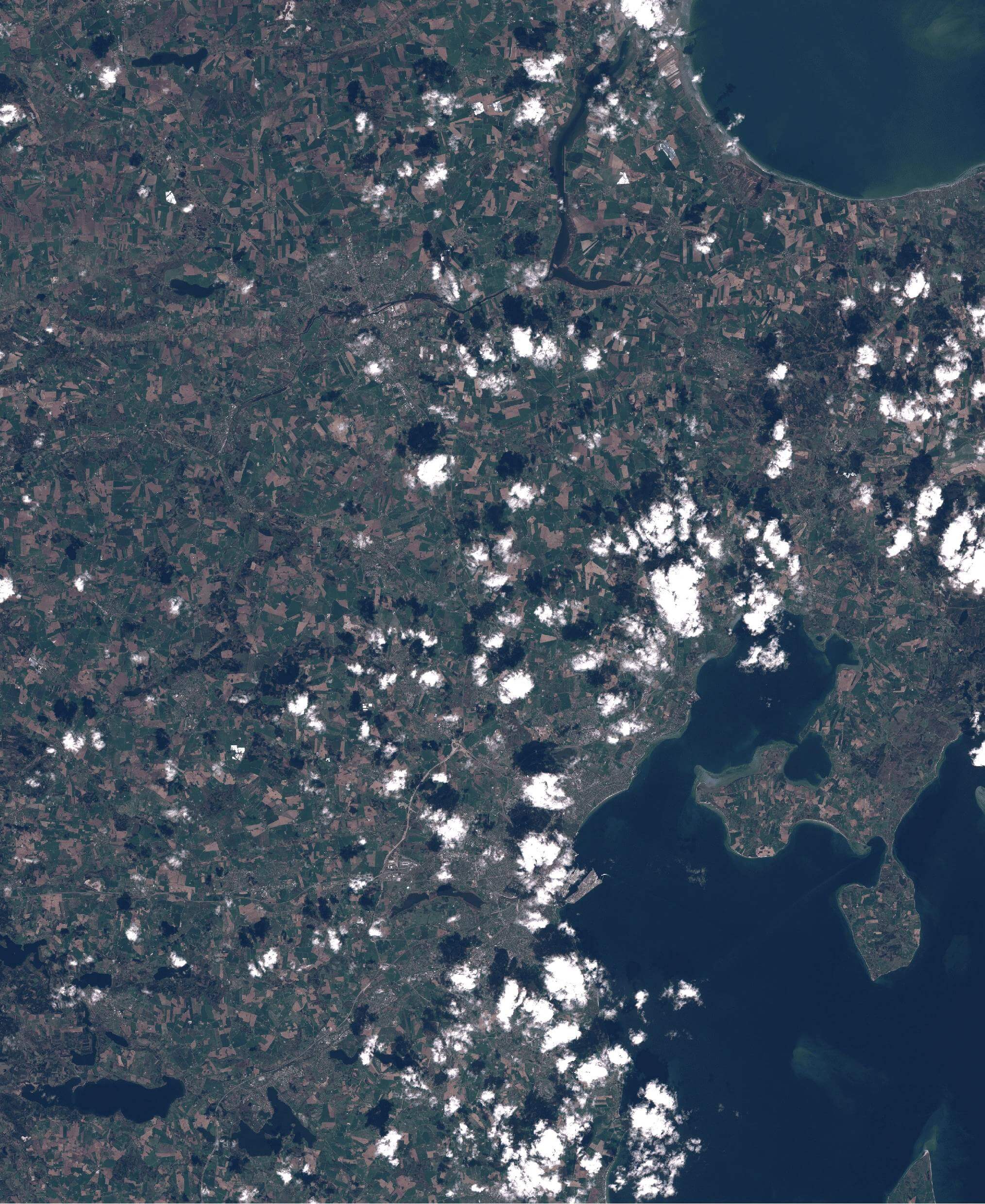
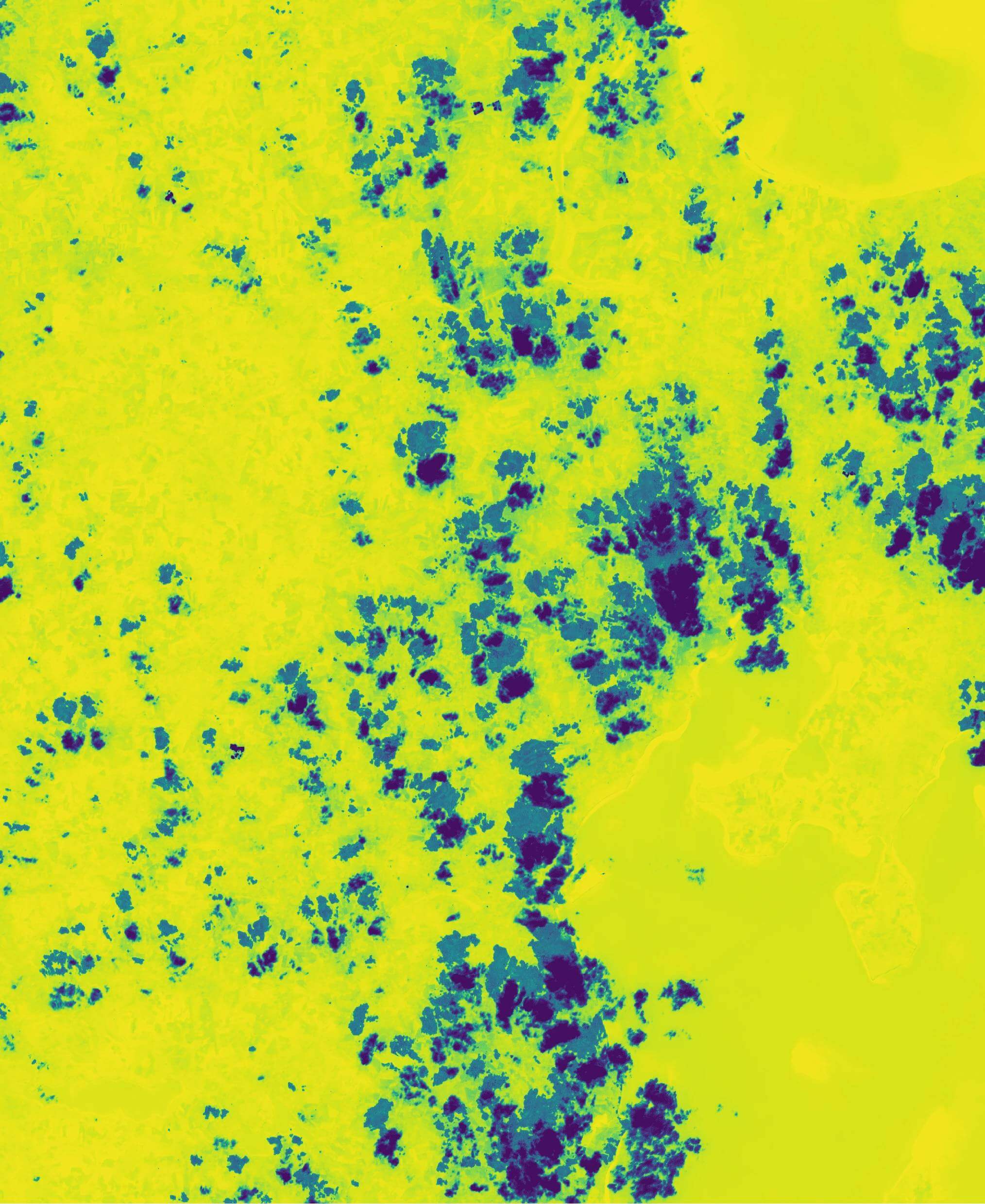
Turn image quality uncertainty into a practical 0-1 signal for filtering, weighting, compositing and automation.
Pricing and access
Included with supported ordered imagery
For supported products, each Monitoring or Single Image order includes the Usability Score for its delivered ClearSKY imagery: a per-pixel usability probability, recommended threshold mask, and usable-pixel summary.
Included in the imagery price
Included Usability Score outputs are part of the imagery price and do not create a separate charge or invoice line. Access to included Usability Score outputs follows the imagery order and is not restricted by service plan.
Source-level and custom scoring
Summary score metadata for eligible underlying source observations is included when available. Full source-level score rasters for every acquisition, historical archive backfills, customer-owned sensors, and custom calibration or delivery formats are separately quoted.
The Usability Score is a probabilistic quality signal, not a guarantee that imagery is suitable for a particular use.
A more useful QA signal
Not a classification layer. A usability probability.
Many satellite QA products force pixels into hard categories: cloud, clear, shadow, snow or invalid. Real-world EO workflows are not that clean. Thin haze, cloud edges, terrain shadows, bright surfaces, snow, smoke, sensor artefacts and atmospheric conditions all affect whether a pixel can be trusted. ClearSKY's Usability Mask turns that uncertainty into one continuous probability of usability.
Not a class mask
The output is not a fixed cloud, shadow or snow classification. It is a calibrated probability that each pixel is usable for downstream analysis.
Flexible thresholds
A strict analytics workflow can use a high threshold. A visual browsing or compositing workflow can be more permissive. The same score supports both.
Designed for scale
Expose usability as a first-class data layer so imagery can be searched, filtered, weighted and automated without manual scene inspection.
One QA signal, many ways to use it
The core product is a per-pixel usability probability. From that score, platforms and analytics teams can derive their own thresholds, usable-pixel summaries and masks depending on how strict the workflow needs to be.
This avoids locking users into fixed quality classes while still making the imagery easy to search, filter and automate.
| Output | Purpose |
|---|---|
| usability_probability | Primary per-pixel output. A continuous 0-1 probability that the observation is usable for the target workflow. |
| recommended_threshold | Optional metadata or configuration value agreed for a specific product, use case or customer workflow. |
| usable_pixel_fraction | Scene, tile or asset-level summary derived from the chosen threshold, useful for catalog search and ordering. |
| thresholded_usable_mask | Optional convenience mask generated from a selected threshold. This is derived from the probability, not a separate model class. |
| delivery_format | GeoTIFF, COG, STAC asset, API field or platform-native QA layer depending on the integration. |
Applications
Built for operators, platforms and analytics teams
The usability probability can be delivered as a standalone QA product or embedded directly into a larger harmonization, fusion or analysis-ready data pipeline.
Satellite operators
- Ship a clear usability signal with new sensor products
- Reduce manual quality review and support burden
- Help customers understand which pixels are reliable before analysis
EO platforms
- Rank and filter imagery by usable-pixel percentage
- Expose threshold controls instead of hard-coded QA flags
- Improve catalog search, previews and automated ordering
Analytics teams
- Mask or weight pixels before vegetation, change or time-series workflows
- Tune quality strictness per application instead of accepting fixed labels
- Improve consistency across sensors, seasons and regions
Implementation
Fast adaptation to new sensors and workflows
ClearSKY was built for multi-sensor data fusion and harmonization. The same foundation makes it possible to adapt probabilistic QA models to new sensors, new archives and new delivery requirements.
1. Ingest representative imagery
We start with sample scenes from your sensor, archive or platform catalogue.
2. Define usability
We agree what "usable" means for your downstream workflows: visual inspection, analytics, compositing or customer delivery.
3. Calibrate the probability
The model is adapted so the score behaves as a practical 0-1 usability signal for your imagery and use case.
4. Deliver the QA signal
Outputs can be delivered as GeoTIFF, COG, STAC assets, API fields or platform-native metadata.
Commercial fit
Why this matters
EO platforms are filling up with more sensors, more archives and more derived products. But if customers cannot quickly understand whether imagery is usable, the data becomes harder to search, harder to sell and harder to automate.
A calibrated usability probability gives both humans and machines a cleaner way to filter observations before analysis. It helps platforms surface better scenes, helps analytics teams avoid unreliable pixels, and helps operators attach a useful QA signal to every delivered product.
Good fit when you need to:
Filter scenes by usable-pixel percentage before ordering or processing.
Let users tune strictness depending on the downstream application.
Reduce the impact of clouds, haze, shadows, bright surfaces and other low-usability conditions without forcing hard classes.
Add a premium QA signal to imagery products, APIs and customer dashboards.
Common questions
Usability Score FAQ
How the probability, threshold, delivery, and product fit work in practice.
Is the Usability Score included with ClearSKY imagery?
What is priced separately?
Is the Usability Score a cloud mask?
Can each workflow choose its own threshold?
How can the score be delivered?
Who is the product designed for?
Make quality actionable
Need a usability probability for your sensor or platform?
Send us representative scenes, your target output format and what your users consider "usable". We can help turn image quality into a practical probabilistic QA product.